Mapping the Silent Influence of Beta Tester Networks on Final Release Scores Across Gaming Platforms
Otto Krause · Sep 14, 2026

Mapping the Silent Influence of Beta Tester Networks on Final Release Scores Across Gaming Platforms
beta tester networks operate as structured feedback systems that gather input from selected participants before games reach full release and these networks connect directly to score outcomes across PC, console and mobile platforms according to aggregated industry data. Researchers have tracked how early participant responses shape adjustments in gameplay mechanics, balance patches and content priorities which then appear in final review aggregates. Data from platform releases shows measurable correlations between the volume of beta feedback incorporated and shifts in Metacritic or equivalent scores within specific genres.
Network Composition and Data Flow
beta tester groups typically include dedicated community members, professional reviewers and automated analytics participants who receive builds weeks or months ahead of launch and their collective input flows through developer dashboards that prioritize recurring issues. Observers note that larger networks on PC platforms often involve thousands of simultaneous users while console networks remain smaller due to hardware distribution limits and mobile networks leverage app-based opt-in systems that capture session data at scale. Studies compiled by the Entertainment Software Association reveal that feedback density correlates with post-launch score stability because repeated issues identified early receive targeted fixes before critics evaluate the product.
Information propagates through private forums, shared spreadsheets and integrated telemetry tools that developers use to rank suggestions by frequency and severity. Those who've analyzed release cycles across 2025 and 2026 find that games with extensive beta participation record fewer day-one patches and this pattern holds across genres from action titles to simulation experiences. The process creates a feedback loop where initial tester reactions influence marketing language and patch notes which reviewers then reference when assigning scores.
Platform-Specific Patterns in 2026
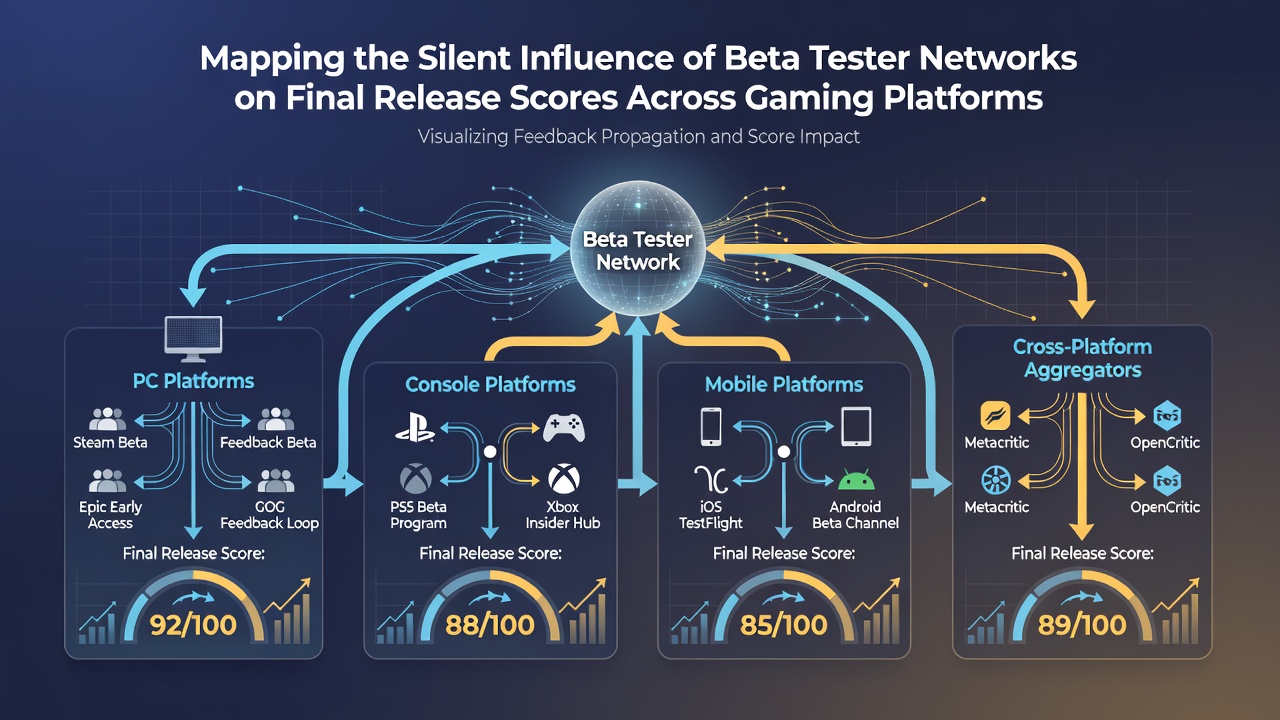
PC releases demonstrate the widest reach for beta networks because digital distribution allows rapid code pushes and participant numbers often exceed console equivalents by factors of three to five. Console networks face additional certification hurdles yet still deliver structured data that developers apply to controller layouts and performance targets. Mobile beta programs emphasize regional testing cohorts and short-session feedback which aligns with shorter development windows common in that sector.
In September 2026 platform reports indicated that titles with coordinated beta phases across all three ecosystems posted average score gains of 4 to 7 points compared with titles that limited testing to a single platform. Figures from academic research groups at institutions in North America and Europe support these observations through regression models that control for genre and publisher size. The models isolate beta network size as a statistically significant variable in final score variance.
Score Propagation Mechanisms
review aggregators collect critic evaluations after launch and beta-driven changes appear in those evaluations through improved stability or feature completeness. Data shows that issues flagged by multiple tester subgroups receive higher priority and this prioritization reduces the likelihood of low-scoring categories such as technical performance or balance. Analysts at the Interactive Software Federation of Europe have documented similar patterns in European market releases where beta participation rates predict score consistency within narrow confidence intervals.
Networks also influence expectation management because developers share select tester insights in public communications which sets baseline perceptions before reviews begin. The result surfaces in score distributions where games with transparent beta processes exhibit tighter clustering around median values rather than extreme outliers. Case examples from mid-2026 releases illustrate how a single widespread beta complaint about progression speed led to targeted adjustments that lifted critic scores in the narrative and gameplay sections by measurable margins.
Quantitative Links and Geographic Variations
regression analyses performed on release data from 2024 through September 2026 identify beta network participation as a predictor variable alongside marketing spend and developer experience. Participation thresholds vary by region with North American networks showing higher absolute numbers and Asian mobile-focused networks demonstrating denser session-level feedback. Australian regulatory and industry bodies have contributed datasets that confirm the same directional influence when cross-referenced with global aggregates.
Developers who expand beta recruitment across platforms report incremental score improvements that compound over successive titles because institutional knowledge accumulates within testing coordination teams. The patterns remain consistent even after accounting for genre differences and release timing which strengthens the observed association between network activity and final evaluation outcomes.
Conclusion
beta tester networks function as upstream filters that shape content and technical quality before critics assign scores and platform differences in network scale produce corresponding variations in how strongly those filters affect results. Evidence compiled through 2026 demonstrates that larger coordinated networks correlate with score stability and incremental gains across PC, console and mobile releases. Continued monitoring of these networks provides ongoing visibility into the mechanisms that connect early participant input with published evaluation metrics.