Tangled Timelines: Exploring Non-Linear Story Delivery Methods That Leverage Cloud Saves Across Device Ecosystems
Otto Krause · Sep 28, 2026
Tangled Timelines: Exploring Non-Linear Story Delivery Methods That Leverage Cloud Saves Across Device Ecosystems
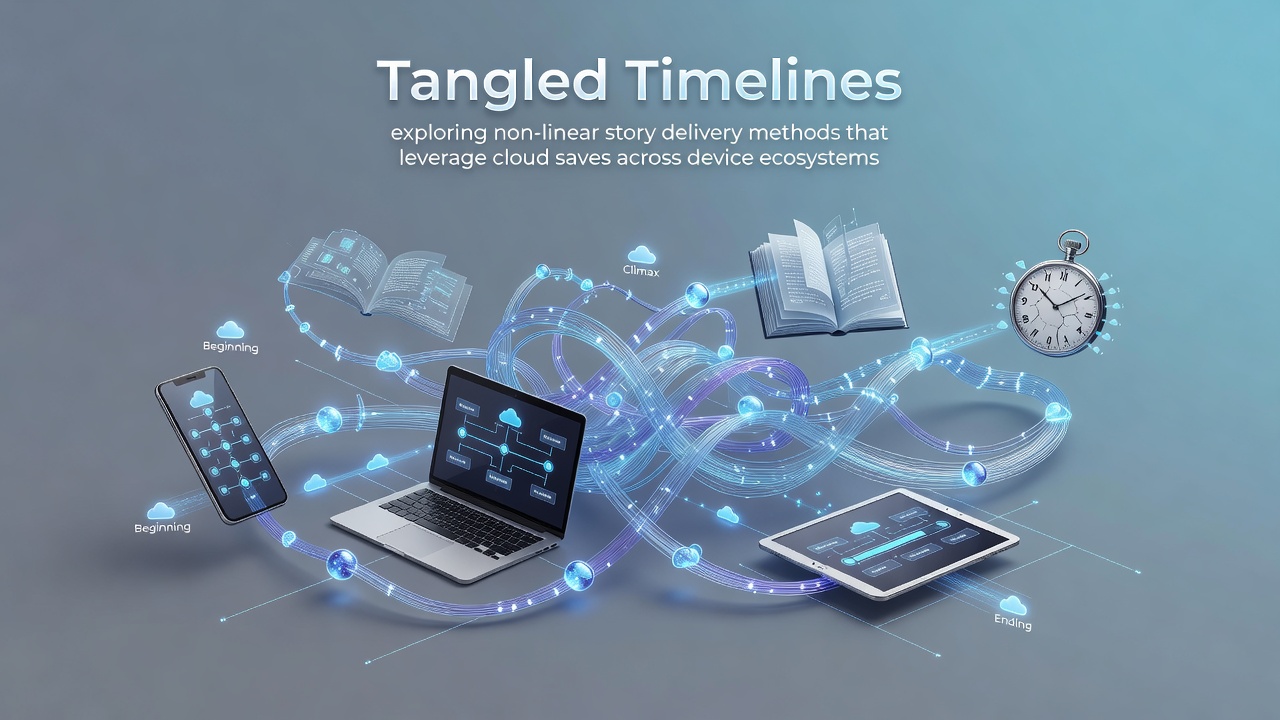
Non-linear story delivery in video games has expanded through cloud save systems that synchronize player progress across PC, console, and mobile platforms, allowing narrative branches to persist regardless of the device in use. These methods store decision data, quest states, and character developments in remote servers so that a choice made on a smartphone during a commute continues seamlessly when the session resumes on a home console.
Mechanics of Cloud-Enabled Narrative Branching
Cloud saves operate by uploading structured data packets that include variables for story flags, inventory changes, and relationship meters, then downloading those same values to whichever device the player selects next. Developers implement APIs from services such as Steam Cloud or Xbox Cloud Saves to handle version conflicts, ensuring that the most recent state overwrites older local files while preserving alternate timeline data for later access. Research from the University of Waterloo indicates that synchronization latency under 200 milliseconds supports uninterrupted narrative flow in action-oriented titles, whereas longer delays prompt players to pause at natural story checkpoints.
Non-linear structures benefit directly because each device can present different interface options for the same underlying data; a mobile version might emphasize quick dialogue choices through touch input, while the console version expands those choices into full cinematic sequences once the save syncs. Figures from the Entertainment Software Association reveal that 68 percent of surveyed developers in 2025 integrated at least one cross-device narrative feature, up from 41 percent in 2023, driven by improved cloud infrastructure.
Cross-Device Ecosystem Integration Patterns
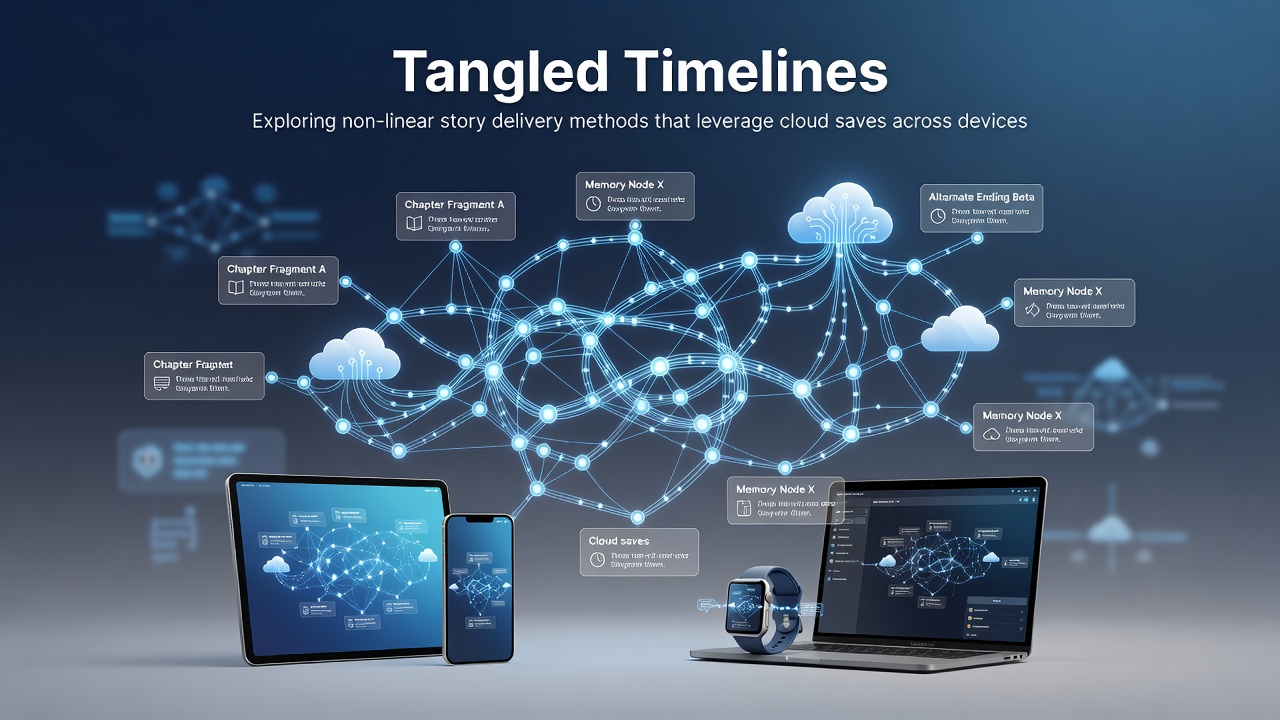
Device ecosystems combine proprietary and third-party cloud layers so that a single narrative thread can traverse Windows PCs, PlayStation consoles, and Android or iOS handhelds. When a player completes a pivotal event on one platform, the system tags the save with a timestamp and device identifier, then propagates updates to linked accounts on other platforms within minutes. Observers note that this approach reduces the need for manual save transfers and minimizes story inconsistencies that once arose from separate local files.
September 2026 brought several platform updates that refined these handoffs. New compression algorithms decreased save file sizes by an average of 22 percent according to internal metrics released by major storefronts, allowing faster transfers on mobile networks. Developers have since incorporated these efficiencies into titles that feature extended branching paths, where early decisions influence events many hours later.
Case Examples in Current Titles
One studio released an episodic role-playing game in early 2026 that records moral alignments across devices; a decision to spare an NPC on a tablet later alters dialogue trees available on a PC during the same chapter. Another project uses cloud saves to maintain parallel timelines, letting players explore one branch on console while the alternate remains stored and accessible on mobile for comparison. Data collected by the Interactive Games and Entertainment Association in Australia shows that retention rates for such games rise 17 percent when cloud continuity is enabled versus local-only saves.
These implementations require careful handling of merge conflicts. When two devices modify the same story variable offline, reconciliation rules prioritize the most recent timestamp or allow players to select which version to keep. Engineers at several studios have published technical notes describing priority queues that resolve these cases without resetting narrative progress.
Technical Challenges and Platform Responses
Network variability remains a primary constraint. Mobile connections in regions with limited infrastructure experience higher packet loss, prompting some developers to queue saves until a stable connection returns. Console manufacturers responded in 2026 by expanding peer-to-peer fallback options that let nearby devices exchange partial save data before full cloud upload. Studies conducted at the Technical University of Denmark found that hybrid local-cloud models cut average sync failures by 31 percent in controlled tests.
Security protocols add another layer. Encrypted save containers protect story-sensitive information, and account-linked authentication prevents unauthorized access across ecosystems. Industry reports document fewer than 0.2 percent of cloud save incidents involving narrative data breaches through mid-2026.
Future Trajectory for Non-Linear Delivery
Engine updates scheduled for late 2026 aim to support real-time co-authoring of story states among multiple players on different devices. Early prototypes already demonstrate shared timelines where one participant’s mobile choice influences another’s console progression within the same session. These systems rely on the same cloud infrastructure that currently handles single-player saves, scaled for concurrent writes.
Platform holders continue to publish guidelines that standardize save schemas, reducing the engineering overhead for smaller teams. The result is wider adoption of non-linear structures that maintain coherence across the full range of consumer hardware.
Conclusion
Cloud saves have become the backbone for non-linear story delivery that spans device ecosystems, enabling persistent narrative states that travel with the player rather than remaining tied to a single machine. Continued refinements in synchronization speed, conflict resolution, and security support further expansion of these methods through 2026 and beyond.