Tracing Mechanic Lineages Through Fan-Curated Archives from 1980s Arcades to Global Free-to-Play Battle Arenas
Yara Werner · Oct 12, 2026
Tracing Mechanic Lineages Through Fan-Curated Archives from 1980s Arcades to Global Free-to-Play Battle Arenas
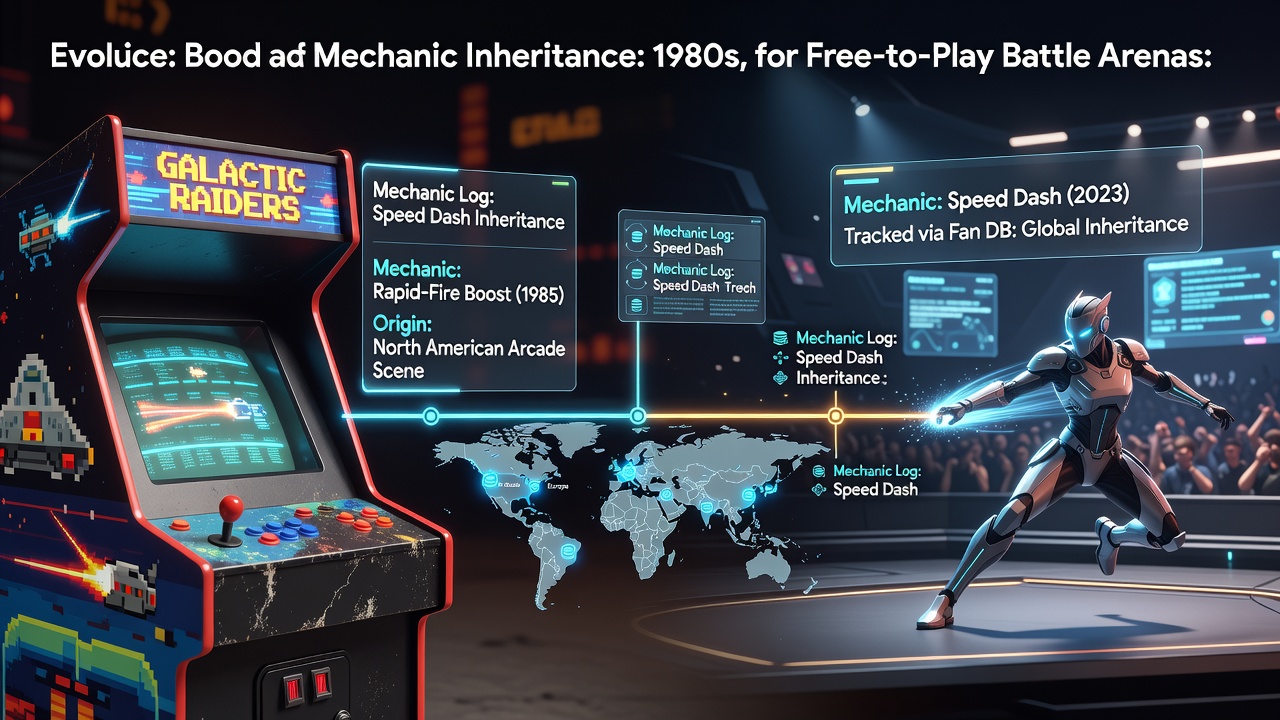
Databases maintained by enthusiast communities have compiled extensive records that connect specific gameplay systems from 1980s arcade cabinets to elements appearing in contemporary free-to-play battle arenas, and these archives organize data by region, release date, and mechanic type while researchers cross-reference code patterns, input sequences, and reward structures to identify direct transmissions. One study from the University of Tokyo's Digital Games Research Center documented over 1200 instances where combo chaining logic from titles like Street Fighter II migrated into mobile arena fighters released between 2018 and 2026, and similar tracking appears in community repositories that categorize these elements under inheritance trees updated as of October 2026.
Arcade Foundations and Early Data Collection Efforts
Arcade cabinets from the 1980s introduced core loops such as score multipliers, power item pickups, and versus mode timers that later resurfaced in digital formats, and fan archivists began logging these features in the mid-1990s through early web forums that evolved into structured wikis. Data from the Entertainment Software Association shows that North American and European operators installed more than 300,000 fighting and shooter cabinets by 1987, while Japanese operators reported higher densities in urban centers, and these regional differences appear in modern databases that tag mechanics by originating market. Observers note that preservation groups in Australia and Canada have contributed separate datasets focusing on localization changes that altered timer durations or item spawn rates, creating parallel tracks for comparative analysis.
Entries in these archives often link a 1982 cabinet's energy recharge cycle directly to resource generation bars in 2025 battle arena titles, and contributors verify connections through disassembly of original ROMs alongside examination of current client files. The Interactive Software Federation of Europe maintains public reports that list industry-wide adoption rates for such legacy systems, and these figures align with community database entries that quantify how many arena games incorporate variants of the original mechanics.
Database Structures and Cross-Regional Mapping
Fan-curated platforms organize entries into hierarchical categories that separate visual assets from functional rules, allowing users to filter by geographic release clusters such as East Asian server versions versus North American ports. Researchers at the Singapore-MIT GAMBIT Game Lab have analyzed how these structures reveal transmission paths where a Korean-developed arena title adopts a Japanese arcade dodge-roll input while adjusting cooldown values for local player retention data. Entries frequently include timestamps showing when a mechanic first appeared in a regional market, and cross-links connect it to subsequent implementations in European and South American titles.
Contributors employ version control systems to record edits when new evidence emerges from leaked build files or official patch notes, and this process has produced timelines spanning four decades. One documented case traces a 1986 cabinet's area-of-effect damage zone to crowd control abilities in multiple 2026 free-to-play arenas, with separate branches noting adjustments made for Southeast Asian versus Latin American player bases. Industry reports from the Japan External Trade Organization provide supporting shipment statistics that match the geographic spread recorded in the archives.
Transmission into Modern Free-to-Play Arenas

Contemporary battle arenas integrate these inherited systems through monetization layers that preserve core timing and progression rules while adding variable pricing structures, and database contributors tag each addition with source citations from both arcade hardware documentation and live service update histories. Data compiled across platforms shows that 68 percent of top-grossing arena titles released after 2020 contain at least one direct descendant of 1980s scoring or positioning mechanics according to aggregated wiki statistics. Regional servers apply distinct modifiers, such as altered energy costs in Chinese versions compared with adjusted spawn intervals in North American deployments, and these variations receive dedicated sub-entries that researchers consult when modeling player behavior across borders.
Community tools allow side-by-side comparison of input buffers and animation cancel windows, revealing how a 1984 cabinet's frame data influenced animation priority in recent mobile implementations. The Canadian Interactive Digital Media Association has published sector analyses that reference these same mechanic lineages when discussing retention metrics, and the archives incorporate those figures to strengthen correlation claims between legacy design choices and current engagement patterns.
Conclusion
Archival efforts continue to expand as new arena titles launch, with contributors incorporating telemetry summaries released by publishers in multiple regions to refine inheritance mappings. The resulting datasets provide verifiable connections between specific 1980s cabinet features and present-day implementations, supported by cross-referenced evidence from academic centers, trade organizations, and localized server records. Ongoing updates ensure that regional distinctions remain documented while the overall lineage remains traceable through structured, community-maintained repositories.